

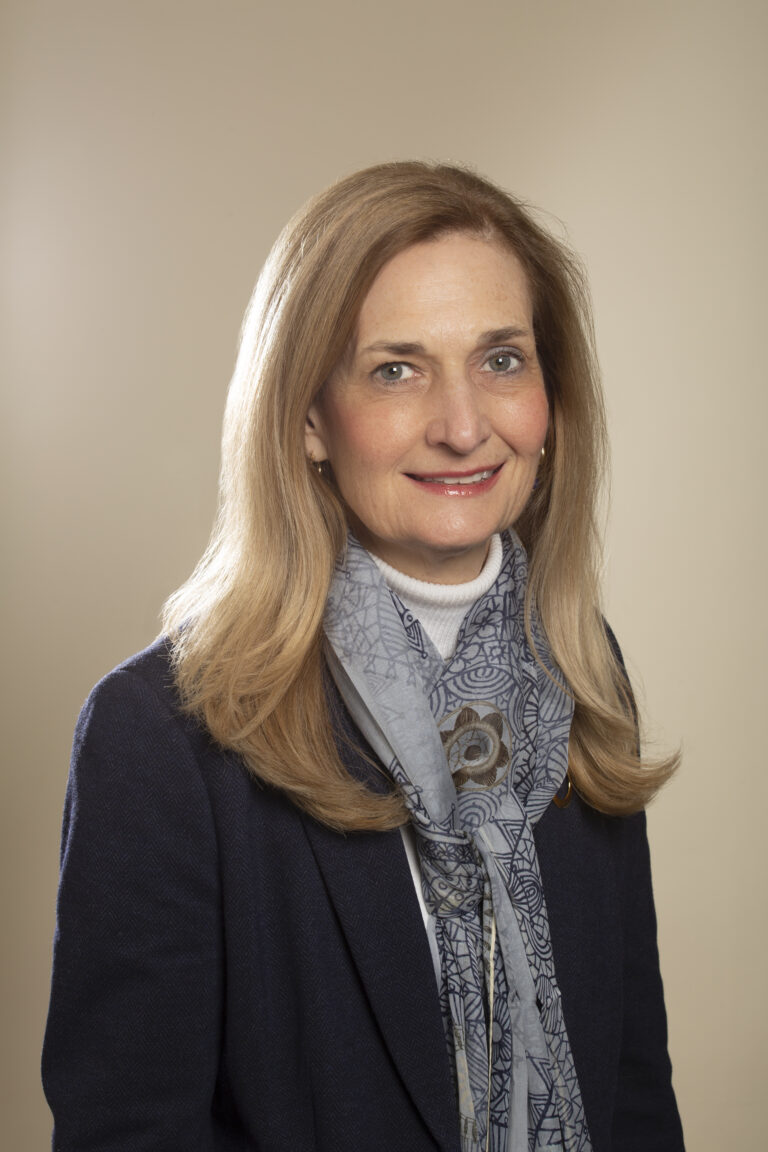
The 2020 American Cytogenetics Conference recognizes Cynthia Casson Morton with our Distinguished Cytogeneticist Award. Cynthia was born in Atlanta where she lived until age 5, when her family moved to Miami. Five year later her family relocated to Easton, Maryland. Cynthia and her 3 younger siblings were raised in this small town on the eastern shore of the Chesapeake Bay, noted for its annual Waterfowl Festival. Cynthia received a bachelor’s degree in Biology from the College of William and Mary and a doctorate in Human Genetics at the Medical College of Virginia, studying human cytogenetics in the lab of Dr. Judy Brown. Early on Saturday mornings in Richmond, Cynthia could be found at “Twin Clinic” assisting Dr. Walter Nance in the collection of biometric and cognitive data on monozygotic and dizygotic twins. Cynthia completed a postdoctoral fellowship in Dave Kurnit’s lab at Children’s Hospital at Harvard Medical School, followed by a fellowship in Phil Leder’s lab in the Department of Genetics at Harvard.
Apparently, life in Boston agreed with Cynthia, as she stayed on as the director of the Director of the Cytogenetics Lab at Brigham and Women’s, and as Professor of Pathology and William Lambert Richardson Professor of Obstetrics, Gynecology and Reproductive Biology at Harvard Medical School. She also serves as the Chair of Auditory Genetics at the University of Manchester, England.
Cynthia has a well-earned reputation as a trailblazer and has made significant contributions to both clinical and basic research in human genetics, concentrating in the categories of gene mapping; clinical cytogenetics; hearing and deafness; uterine fibroids; and chromosomal structural rearrangements.
She was one of the first cytogeneticists to use chromosomal in situ hybridization in gene mapping. Her research assigning the IGH locus to 14q32, circa 1982, followed by the localization of MYC to 8q24, was crucial to understanding the pathobiology of Burkitt lymphoma. In over 80 papers, she contributed to greater than 100 gene assignments. She actively participated in the Gene Mapping Workshops and was Chair of the committee for chromosome 15
As a clinical cytogeneticist, Cynthia championed the introduction of solid tumor cytogenetics into the clinical cytogenetics laboratory in the 1980’s. Along with her first fellow, Dr. Jonathan Fletcher, she established this lab service and BWH Cytogenetics became recognized worldwide as a leader in this area. She continues to change the field of clinical cytogenetics by implementing next-generation sequencing into characterizing structural chromosome rearrangements at the nucleotide level. Four manuscripts published in The American Journal of Human Genetics illustrate her continual innovation: the first in 2014 set out a system for the next chapter of the International System for Cytogenetic Nomenclature (ISCN) to provide a next-gen cytogenetic nomenclature, the second in 2016 is a game changer in the interpretation of phenotypes from structural chromosome rearrangements based on their position with respect to topological associating domains (TADs) in chromatin, the third in 2017 presents computational methods to discover genetic etiologies in chromosomal rearrangements residing in non-genic regions that inform clinical diagnoses, and the fourth reveals the value of implementing liGS in diagnosing the complexity of chromosomal abnormalities in recurrent miscarriage. She was elected in 2019 to serve as one of two members from North America to the ISCN Committee.
Following on with her interest in solid tumor cytogenetics, Cynthia’s laboratory was among the first to describe consistent chromosome rearrangements in uterine leiomyomata and used these rearrangements in gene discovery experiments illuminating HGMA2 dysregulation in the most common translocation in these tumors. In addition to other successful gene discovery experiments in fibroids, she pursued genetic linkage analysis and genome-wide association studies in uterine fibroids that resulted in identification of FASN as the first risk allele for white women to develop uterine fibroids. Her laboratory has completed in vitro experiments with fatty acid synthase inhibitors and is now performing in vivo experiments with the goal of conducting a clinical trial to develop a medical therapy for these neoplasms. Most recently she has led and published the largest GWAS in uterine fibroids identifying dozens of genome-wide significant hits and revealing common genetic origins between uterine leiomyomata and endometriosis.
Another major effort of Cynthia’s lab has been to use apparently balanced structural chromosome rearrangements in individuals with clinical disorders to discover genes involved in human development. DGAP (Developmental Genome Anatomy Project) has been a major success resulting in annotation of over 150 human genes, description of chromothripsis, and transition of this technology using NGS into clinical diagnostics for prenatal diagnosis. Many of us who have contributed patients to the DGAP project have benefited from this area of Cynthia’s research. Cynthia was recognized for her vast contributions to clinical cytogenetics from her research and her leadership in her election as a Fellow of the AAAS with the citation, “For distinguished contributions to the field of cytogenetics, particularly for pioneering technologies to study structural chromosome rearrangements and their relations to human disease.”
Cynthia’s laboratory made a significant contribution to the field of auditory genetics by establishing the first human fetal cochlear cDNA library. This resource and the derived ESTs have been used by investigators worldwide. Her laboratory’s isolation and characterization of COCH (etiology of DFNA9) was an initial discovery that became an ongoing area of research and has now evolved into gene editing to cure genetic forms of deafness. Cynthia has been a champion of an etiologic focus in newborn hearing screening, and she is now implementing genomic sequencing into newborn hearing screening in three Boston hospitals. In the past year, she co-led the Newborn Hearing Screening Working Group of the National Coordinating Center for the Regional Genetics Networks and published a proposal for comprehensive newborn hearing screening to improve identification of deaf and hard of hearing children. She has co-authored two large studies in China validating the need for genetic screening in newborn screening for hearing loss.
In addition to her laboratory successes, Cynthia has served on the Board of Directors of both the American Board of Medical Genetics and the American Society of Human Genetics and is a Past President of ASHG. She has been the editor of The American Journal of Human Genetics; and is currently co-editor of Human Genetics and serves on the editorial boards of Genes Chromosomes Cancer, Am J Hum Genet, Hum Genet, Appl Clin Genet, Audiol & Neurotol, Int J Women’s Health, Cancer Manage & Res, Mol Syndromology.
Cynthia lives in Newton, MA, with her husband of 39 years, Bill. Their son Russell and his wife Emilie live in Ann Arbor where Russell is completing a doctorate in Economics. Their daughter Emily is at Stanford working on a doctorate in Development and Psychological Sciences. Anyone who knows Cynthia knows that her hobby is ‘work’, which she considers a special privilege. She also enjoys traveling – this includes traveling to England for her job at the University of Manchester – and traveling with family and friends. Cynthia and Bill also enjoy entertaining in at home, providing fabulous food and always interesting company.
It is now our special privilege to present Cynthia with the 2020 Distinguished Cytogeneticist Award!
Katy Phelan
Awards