

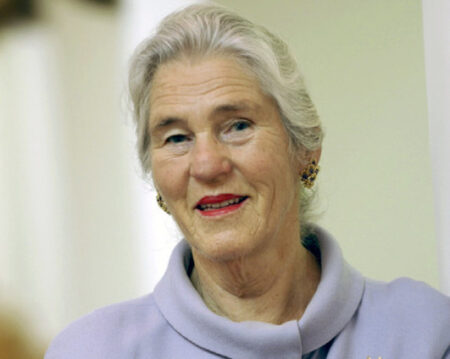
During this, the 2012 American Cytogenetics Conference, we honor the career of Janet Davison Rowley, a physician, scientist, and a founder of the field of modern cancer cytogenetics. Her contributions span over half a century and are represented by more than 400 publications, numerous awards and honors, among which are the American Society of Human Genetics Allan Award and the Presidential Medal of Freedom. Dr. Rowley has been a driving force for understanding the biological importance of chromosomal translocations and much of her most significant work has influenced the way leukemias and lymphomas are diagnosed and treated. Her seminal discoveries of translocations associated with different types of leukemia have become part of the standard of care in determining the optimal treatment for every leukemia patient. Her work on translocation breakpoints has shaped our biological understanding of the role of genes in cancer and has provided tools to track the effectiveness of treatment. Dr. Rowley’s study of translocations was also instrumental in the expansion of the fields of molecular genetics and molecular oncology and her continuous quest for the answers to fundamental questions led directly to the work she does now in the molecular biology of microRNAs.
Part of Janet Rowley’s success entails a woman who was at the right place at the right time. In 1940, she received a scholarship to college in a special program at the University of Chicago which combined the last two years of high school with the first two years of college. Thus, she enrolled as an undergraduate at age 15 and earned a PhB (1944), BS (1946) and MD (1948) at the University of Chicago. Her education in medicine did not start so easily; her entrance to medical school was delayed by a year because the quota for women (three) was filled. She graduated in 1948 and a day after graduation she married Donald Rowley. Janet completed a one year internship at a Public Health Service hospital before moving to Bethesda, Maryland where Don had accepted a position at the NIH. After three years, the couple returned to Chicago and Janet resumed her work part-time in well-baby clinics when Don began working as an experimental immunologist on faculty at the University of Chicago. In 1956 Janet took a job at a Cook County Hospital clinic working with children with developmental disabilities such as Down syndrome. Soon after, trisomy 21 was discovered to cause Down syndrome and she was inspired to study cytogenetics as a medical specialty.
Janet got her first chance to conduct research when Don took a sabbatical year in Oxford in 1961. Ever resourceful, she won a special fellowship from the NIH to study cytogenetics at Churchill Hospital in Oxford. This was extremely fortuitous timing, as the field was in its infancy and scientists were just beginning to explore chromosome replication. Her productivity was amazing— between 1962 and 1964, she published four seminal papers, and was first author on two (cited in Rowley, 2009). But what is more amazing is how she managed to do the analysis at this early stage in her career while also caring for four children.
After returning to Chicago, she obtained support from Leon Jacobson, a hematologist who had become an expert on the effect of radiation on blood cells from monitoring physicists working on the Manhattan project, just a couple blocks from the University medical center. Thanks to a stipend from the Atomic Energy Commission she could analyze the chromosomes prepared in Sweden and England. Janet rose through the ranks becoming Professor of Medicine at the University of Chicago in 1977. She is currently the Blum-Riese Distinguished Service Professor of Medicine, Molecular Genetics & Cell Biology, and Human Genetics.
It was after the family’s second stay in Oxford during 1970-1971 that Janet made her most significant discoveries. At Oxford she learned banding by quinacrine fluorescence and applied this technique upon returning to Chicago. Within the next couple of years she demonstrated that the small Philadelphia chromosome was actually a translocation between two chromosomes, hence characterizing for the first time the t(9;22). She had already described the recurring abnormality t(8;21) in 1972, and this second translocation convinced her that these were critically important in leukemia. Discovery of the t(15;17), t(6;9) and t(14;18) in lymphoma would soon follow.
Janet states in a detailed review (Rowley 2009), “This was a time of great excitement and wonder that is hard to describe.” Collaborating with many colleagues, including those involved with the International Workshops during the 1970’s and 1980’s, several main themes emerged which changed the way researchers and clinicians treat leukemia and lymphoma. Not only are there recurrent chromosome abnormalities, but they often strongly associate with specific phenotypes of leukemia and lymphoma, including the presence of cytogenetic-clinicopathologic entities. The phenotype even extends to how well patients respond to therapy, and the karyotype is a powerful independent predictor of survival.
In the three decades since, Dr. Rowley and her colleagues have discovered the MLL gene, characterized genomic breakpoints, and used cutting-edge microarray technology in the study of leukemia translocations. More recently, she has entered into the world of microRNAs. Her pace has not slowed in the lab; her goal remains to find the best treatments for leukemia: targeted and personalized. She has continued to pursue the answers to fundamental questions yet to be resolved: what causes translocations, and what are the critical steps of leukemogenesis?
As noted above, Janet Rowley has received numerous awards. We are very pleased to now add the American Cytogenetic Conference’s Distinguished Cytogeneticist Award to this list.
FURTHER READING: Reminiscences and summaries of early work
Chandra HS, Heisterkamp NC, Hungerford A, Morrissette JJD, Nowell PC, Rowley JD, Testa JR. 2011. Philadelphia chromosome symposium: Commemoration of the 50th anniversary of the discovery of the Ph chromosome. Cancer Genet. 204:171-179.
Rowley, Janet D. 2008. Chromosomal translocations: revisited yet again. Blood 112:2183-2189.
Rowley, Janet D. 2009. Chromosomes in leukemia and beyond: from irrelevant to central players. Annu. Rev. Genomics Hum. Genet. 10:1-18.
Awards