

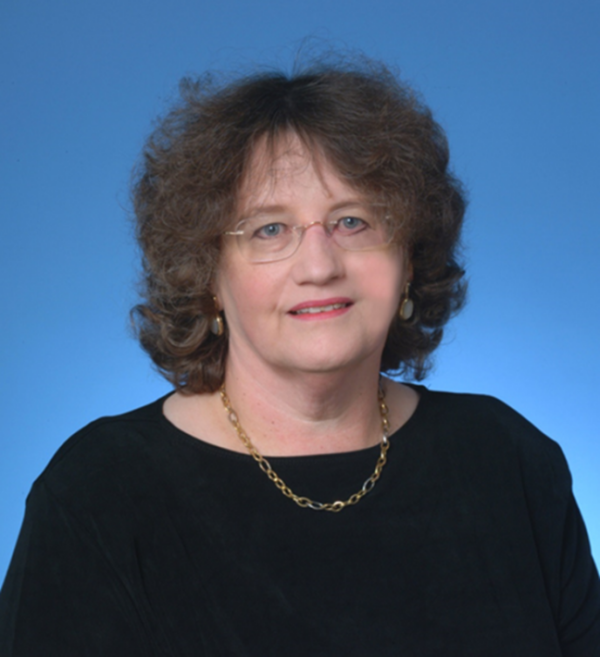
During this 2016 American Cytogenetics Conference we honor the career of Dr. Kathleen Rao, who was born in New York City and raised in Roanoke Va. While she initially attended the Medical College of Virginia School of Nursing, she quickly determined this was not a good career fit and transferred to the College of William and Mary where she received her BS in Biology in 1970. Following college Dr. Rao entered graduate school in the Department of Zoology at the University of North Carolina at Chapel Hill (UNC-CH) where she spent one semester in a laboratory that studied leaches and tarantulas. Again sensing a poor match, Dr. Rao decided to postpone graduate school, get a job and rethink her career options. Thankfully, given the choice of an entry level position as an AT&T telephone operator or a position as a technician in the new Clinical Cytogenetics Laboratory at UNC-CH, Dr. Rao chose the latter. From 1971 to 1976 she functioned as both senior technician and supervisor in this laboratory with Dr. Phil Buchanan, and a cytogenetic superstar was born. While here, she perfected the art of cell culture, and learned to analyze and karyotype both solidly stained and later Q-banded chromosomes. Having identified her passion Dr. Rao’s re-entered graduate school as a student in the Genetics Curriculum at UNC-CH where she worked in the laboratory of Dr. H. Neil Kirkman, an internationally known biochemical geneticist. She earned her PhD in 1980 and accepted her first faculty position at East Carolina University in Greenville, NC where she established their first clinical cytogenetics laboratory and functioned as the Laboratory Director until 1984. It was here that she learned the art of G-banding, a technique that she brought to UNC-CH when she returned in 1984. From 1984 until her death Dr. Rao rose through the ranks to become a tenured professor in the Departments of Pediatrics and Pathology & Laboratory Medicine, and a research professor in the Department of Genetics while also serving as Director of the Cytogenetics Laboratory at UNC Hospitals.
During her long career, Dr. Rao made numerous contributions to not only the field cytogenetics but to the broader field of medical education. She was a member of the ad hoc committee established to form the North Carolina Medical Genetics Association which advocates for genetic education, and promotes both the sharing of genetic information and the availability of high quality comprehensive genetic services for the citizens of NC. She was a member of this organization from its inception in 1984, and served as President from1990-1991. Dr. Rao was also a primary mover in developing cytogenetics proficiency testing long before the College of American Pathologists (CAP) provided this service. She served as coordinator for the Southeastern Regional Genetics Group (SERGG) Cytogenetics Laboratory Proficiency Testing Program (1986-1990) and was a member of the Council on Regional Networks (CORN) Quality Assurance Committee (1995-1998). Dr. Rao was also a Founding Fellow of the American College of Medical Genetics and Genomics (ACMG) and served as a member of the ACMG’s Laboratory Quality Assurance Committee (2003-2010). From 2007 to 2010 she functioned as Chair of this group, restructuring the single large committee into the productive subcommittees that exist today. As Co-Chair of the ACMG Salary Survey Work Group (2006-2008) and a workgroup member (2008-1010), she was instrumental in establishing the first and only salary survey specific to board certified medical geneticists. Dr. Rao also served on the ACMG Board of Directors (2009-2015), functioning as the Board Liaison to the Laboratory Quality Assurance Committee while also serving as the Vice President for Laboratory Genetics (2013-2015). Additionally, she was an ACMG representative to the CAP Cytogenetics Resource Committee (1998-2005) serving as Vice Chair from 2003 to 2005. She was twice elected as a member of the International Standing Committee on Human Genetic Nomenclature (2007-2016).
Dr. Rao served as head of the Cytogenetics Committee of the Children’s Oncology Group (COG) from 2011 until her death. She served on the COG Cytogenetics Review Committee since the inception of COG; and previously served on the Children’s Cancer Group Cytogenetics Review Committee. In addition to her efforts in these administrative roles, Dr. Rao contributed to COG and to advancing knowledge of pediatric cancer both as a devoted mentor and as an exceptional cytogeneticist. Numerous former trainees are now directors of COG-approved cytogenetic laboratories, and at the bi-yearly COG cytogenetics workshops, she continued to mentor and to teach with her informative and popular “You do the Review” presentations. It was Dr. Rao’s laboratory that detected the very subtle deletion within 5q that provided the foundational work for the exceptional case that served as a prototype for Ph-like acute lymphoblastic leukemia cases that responded to a TKI therapy; just one of thousands of outstanding analyses performed in her laboratory and interpreted by her. Dr. Rao also participated in the Cancer and Leukemia Group B (CALGB)/Alliance for Clinical Trials in Oncology as the longest serving member of the Karyotype Review Committee (1986-2016), and as a member of the Leukemia/Lymphoma Correlative Sciences Committee (1988-2000).
In her role as an educator Dr. Rao was a great advocate for medical education at all levels. She was a leader in medical student education and curriculum design at UNC-CH, and both founded and co-directed the UNC School of Medicine’s Academy of Educators which supports and enhances the careers of teaching faculty. In recognition of these contributions a grant program for innovative teaching projects was named in her honor. As Director of the Cytogenetics Laboratory Fellowship Training Program at UNC-CH she taught and mentored numerous students who now work in the field throughout the U.S. Countless others including medical students, residents, genetic counselors, and technologists were also mentored. Kathleen was also a strong advocate for fixed term (non-tenured) faculty. She recognized the importance of these individuals and participated in multiple task forces at UNC-CH to improve the recruitment, retention and support of these individuals.
Throughout her career Dr. Kathleen Rao contributed to the standards, guidelines, and proficiency testing practices which are now the cornerstones of our field and part of her legacy. Dr. Rao leaves behind multiple well trained cytogeneticists, and countless others, with whom she shared much, including her appreciation for a beautiful karyotype or a long, complex, and correctly written string of nomenclature, her strong work ethic, her sense of collegiality and professionalism, and her very strong belief in the importance of good patient care. Her leadership, extensive knowledge base, sense of humor and kindness will be missed.
Submitted by Kathy Kaiser-Rogers, PhD and Nyla Heerema, PhD
Awards