
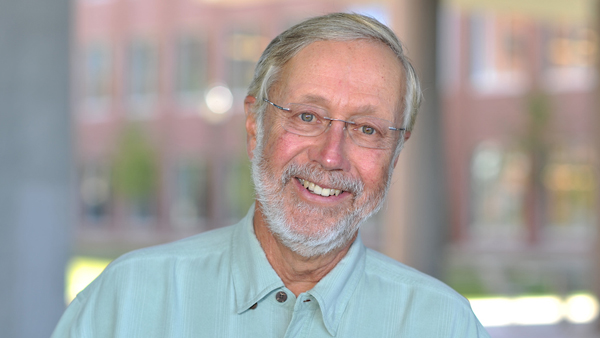
Dr. Terry Hassold is an internationally recognized leader in human cytogenetics and reproductive biology, whose work has greatly advanced our understanding of chromosome abnormalities in human reproduction. He is an Eastlick Distinguished Professor Emeritus at the School of Molecular Biosciences at Washington State University and a former Director of the Center for Reproductive Biology, a collaborative research initiative between Washington State University and the University of Idaho.
Dr. Hassold’s research has focused on the origin, mechanisms, and effects of human chromosome abnormalities, which cause more than half of all miscarriages and are a leading cause for congenital anomalies and intellectual disabilities. Using combined classical cytogenetics, molecular techniques, and model systems, his work has provided fundamental insights into meiotic recombination, chromosome segregation, and the biological basis of aneuploidy in both humans and model organisms. His contributions have played a key role in advancing our understanding of the underlying mechanisms for aneuploidy.
Throughout his career, Dr. Hassold has authored over 200 peer-reviewed scientific papers and edited three influential books, establishing himself as a leading authority on meiotic chromosome behavior. His work has made a lasting impact on human genetics, reproductive biology, and clinical cytogenetics.
Dr. Hassold has also shown outstanding service to the community. He has served on many NIH scientific review panels and advisory boards, including those of the National Down Syndrome Society and organizations that support individuals and families affected by trisomy disorders. He has held editorial leadership roles for several top journals, including the American Journal of Human Genetics, American Journal of Medical Genetics, Chromosoma, and Cytogenetics and Genome Research. Additionally, he served on the Board of Directors of the American Society of Human Genetics.
Through his research excellence, mentorship, and sustained service, Dr. Hassold has made lasting contributions to cytogenetics and human genetics. The American Cytogenomics Conference is proud to honor him with the 2026 Distinguished Cytogeneticist Award.